The almanac
Twelve months, twelve trades
Each month gives you something and takes something away. Here is the trade in each one.
| Month | Weather | Wildlife | Crowds and price |
|---|---|---|---|
| January | Hot, dry, clear | Excellent; Kilimanjaro at its clearest | Peak to about the 5th, then quiet |
| February | The hottest, driest month for much of the country | Superb; animals tied to water | Quiet. The best quality-to-price month. |
| March | Dry, then long rains usually late in the month | Very good early, greening late | Quiet, rates falling |
| April | The wettest month nearly everywhere | Green, dispersed, excellent birding | Cheapest. Some camps close. |
| May | Wet, usually easing late | The greenest landscape of the year | Cheapest. Some camps still closed. |
| June | Rains end, cool nights, grass still long | Improving weekly | Quiet, good value |
| July | Dry and cool | First wildebeest usually reach the Mara | Peak begins |
| August | Dry, cold mornings, dusty afternoons | The classic crossing month | The busiest month of the year |
| September | Dry, warming | Crossings still likely, herds settled | Peak easing through the month |
| October | Dry and hot; short rains possible late | Very good; herds drifting south | Quieter than August, similar quality |
| November | Short rains, usually afternoon storms | Green flush; migrant birds arrive | Low rates, superb light |
| December | Rains taper, bright from mid-month | Very good, landscape green | Quiet early, peak from about the 20th |
January
Hot, dry and clear. The short rains have finished, the country has kept some of their green, and the air is about as clean as it gets — which is why January is the best month of the year to see Kilimanjaro from Amboseli, usually in the first hour after sunrise.
The first few days are peak, because everyone who came for Christmas is still here. From roughly the second week it goes quiet, rates fall back, and you get excellent game viewing without the August crowd.
Take it if: you want top-quality game viewing, clear air and space, and you can travel after the New Year rush.
Skip it if: you want river crossings, which are seven months away.
February
For much of the country, the hottest and driest month. Vegetation has thinned, water has drawn down to a few reliable places, and the animals concentrate accordingly — which makes finding them straightforward.
It is also one of the quietest months of the year, which is an odd combination: some of the best viewing available in Kenya, at rates a long way below July and August. If someone asks us for value without compromising the safari, February is usually the first thing we say.
The cost is heat. Amboseli and the northern drylands are genuinely hot at midday, and the light between about eleven and four is harsh for photography.
Take it if: you want August-quality game viewing at shoulder prices.
Skip it if: you cannot cope with dry-country heat, or you need the migration.
March
A month of two halves, and which half you get is not fully predictable. The first two or three weeks are usually still dry and still very good. Somewhere towards the end of the month the long rains normally arrive, though "normally" is carrying a lot of weight in that sentence these days.
Rates fall through March as camps move into their low season, and the parks are quiet. If you are comfortable with some risk of rain in exchange for a materially lower bill, early March is a good bet.
Take it if: you want dry-season conditions at low-season prices and you can accept the gamble.
Skip it if: a wet week would ruin the trip for you.
April
The wettest month across most of Kenya. It does not rain continuously, but it rains often and sometimes for days, black-cotton tracks in parts of the Mara become genuinely difficult, and a number of camps close for the month.
What you get in return is the cheapest safari of the year, a country that has gone extravagantly green, migrant birds still present, and parks so empty that you can spend an hour with a leopard and see nobody else at all.
If you travel in April, stay somewhere with all-weather access and a vehicle that can cope. This is not the month to economise on the wrong thing.
Take it if: price and solitude matter more than certainty, and you are a confident traveller.
Skip it if: it is your first safari, or you have one week and no flexibility.
May
Usually still wet, usually easing towards the end. The landscape is at its greenest and most photogenic — long grass, dramatic skies, everything in flower — and the rates are still at their lowest.
The grass is the catch. Long grass hides small animals and makes cats harder to find, so game viewing takes more work than it does in September. Birders and landscape photographers tend to love May; people who want to tick off a list in three days tend not to.
Take it if: you photograph landscapes, watch birds, or simply want the country to yourself.
Skip it if: you are counting species in a short trip.
June
The transition, and an underrated month. The rains end, the country dries out week by week, the grass starts to come down and the nights turn properly cold. By late June the game viewing is nearly as good as July and the rates have not yet moved.
The wildebeest are usually still in Tanzania in June, though early arrivals occasionally cross in the last week. Do not plan a June trip around them.
Take it if: you want the dry season without peak pricing.
Skip it if: the migration is the whole point.
July
The dry season proper. Cool, bright, dusty by late afternoon, and the month when the first wildebeest herds usually push north into the Mara — typically from the middle of the month, though it varies by weeks in either direction.
Peak pricing starts and northern-hemisphere school holidays begin. The Mara gets busy and the best camps have been full since last year.
Take it if: you want the dry season and the start of the migration and you booked early.
Skip it if: crowds bother you and your dates can move.
August
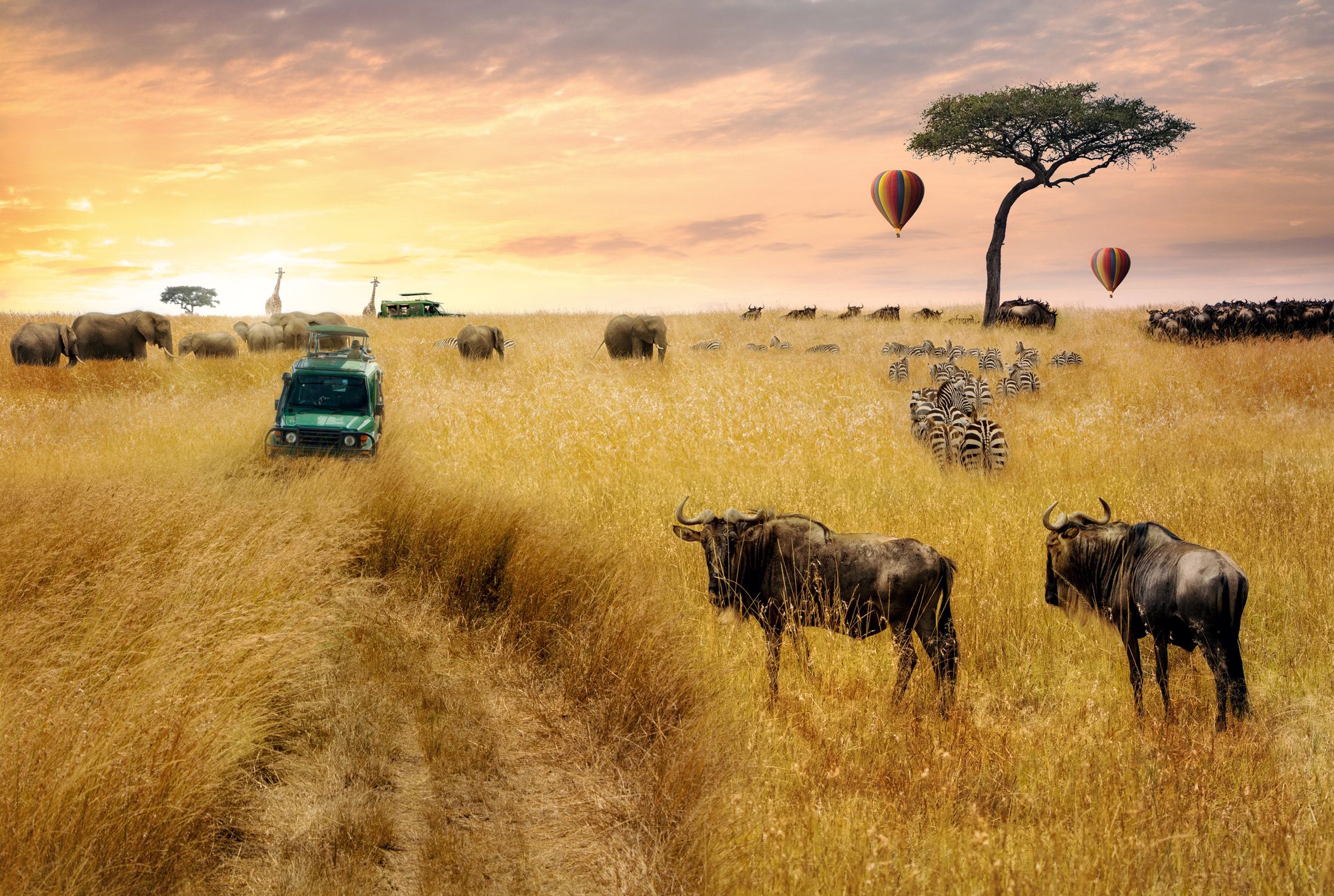
The month everyone means when they say "safari". Dry, cool in the mornings, the Mara full of wildebeest, and river crossings at their most likely.
It is also the most crowded and most expensive month of the year, and in the national reserve a good sighting can attract a queue of vehicles. If you are coming in August, the conservancies bordering the reserve are worth the premium for the vehicle limits alone.
Take it if: crossings are non-negotiable and you have booked well ahead.
Skip it if: you would rather have the same animals with fewer people around them.
September
The month we quietly recommend most. Crossings are still likely, the herds have settled into the Mara, the weather is dry and warming, and from about the second week the crowds and the rates both start to come down.
It is the closest thing Kenya has to a free lunch: most of what August offers, with a bit more room.
Take it if: you want the migration without the peak of the peak.
Skip it if: you need the absolute highest crossing odds, which belong to August.
October
Dry, hot and thinning out. The herds begin drifting back south during the month, so crossings become less likely as October goes on, but the resident game is excellent and the Mara is markedly quieter than it was six weeks earlier.
The short rains sometimes arrive at the very end of the month. If they do, they arrive as storms rather than as a season.
Take it if: you want dry-season viewing with room to breathe.
Skip it if: you are counting on crossings.
November
The short rains, and the most misunderstood month in the Kenyan calendar. They usually come as heavy, spectacular afternoon storms that clear as fast as they build, rather than as days of grey drizzle. Mornings are often perfectly clear.
The country greens up almost overnight, Palearctic migrant birds arrive in numbers, the light after a storm is the best of the year, and rates are at low-season levels. It is a photographer’s month and a value month at the same time.
Take it if: you photograph, you watch birds, or you want good viewing at low rates.
Skip it if: an afternoon indoors would feel like a wasted day.
December
Two months in one. The first half tapers out of the short rains, is quiet and is priced accordingly, with a green landscape and very good viewing. From around the 20th the country goes to peak — Christmas and New Year rates are the highest of the year alongside August, with minimum stays attached.
If you can travel in the first two weeks of December, it is one of the better-kept secrets in the calendar.
Take it if: you can go before the 20th.
Skip it if: you are tied to Christmas week and the price matters.
More from our Kenya guides
Specialist guides across our Kenya network
Each of these is a focused guide we publish. Same Kenya specialist behind every enquiry.
Ready to turn this into a real itinerary?
Send us your dates, who is travelling and roughly what you want to spend per person per night. Our Kenya specialist comes back within 24 hours with a plan built around them and a costed quote.